
Historical · U.S. House · Pennsylvania · District 9
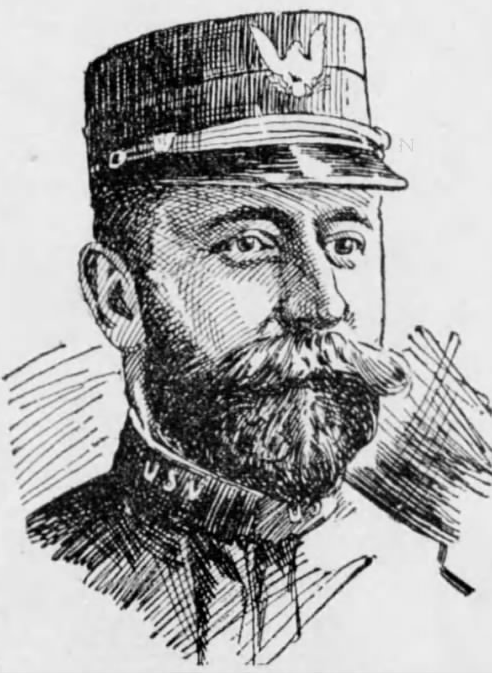
Henry Green
Former U.S. Representative · Pennsylvania District 9 · 1899–1903 · Democratic
Henry Green represented Pennsylvania's District 9 in the United States House of Representatives (1899–1903) for the Democratic party. The page below collects sourced biographical facts, term history, committee roles, and provenance for Green.
Bioguide ID: G000411
Key facts
- Full name
- Henry Green
- State
- Pennsylvania
- District
- District 9
- Party
- Democratic
- House service
- 1899–1903
- First House term
- 1899
- Status
- Left office
- Current term ends
- —
- Born
- 1857
- Bioguide ID
- G000411
- Committee assignments
- —
- Dataset version
- 1.20260606
Biographical narrative
905 words · sourced from the Wikipedia REST extract
Henry Green was an American politician who served as a Democratic member of the U.S. House of Representatives for Pennsylvania's 9th congressional district from 1899 to 1903. His political career spanned various levels of government, including service in both the Pennsylvania State House and the State Senate. In addition to his legislative work, Green had a military background, serving as a captain during the Spanish-American War. After his congressional tenure, he returned to his legal practice and engaged in various business ventures, including oil operations.
Early life and career
Henry Dickinson Green was born on May 3, 1857, in Reading, Pennsylvania. Growing up in a city with a rich history and a diverse population, Green was exposed to a variety of social and economic issues that would later inform his political career. He attended local public schools and graduated from Reading High School in 1872. Following his secondary education, he pursued higher education at Yale College, where he completed his studies in 1877. This educational background provided him with a solid foundation in critical thinking and public discourse, skills that would serve him well in his later political endeavors.
After graduating from Yale, Green studied law and subsequently gained admission to the Berks County bar in 1879. He began his legal practice in Reading, where he developed a reputation as a competent attorney. His legal career coincided with his growing interest in public service and politics. In 1883, he entered the political arena by winning a seat in the Pennsylvania State House of Representatives, representing the Berks County district. He served in this capacity until 1886, during which time he gained valuable experience in legislative processes and constituent relations.
Following his tenure in the State House, Green continued his political career by serving in the Pennsylvania State Senate from 1889 to 1896, representing the 11th district. His time in the Senate further solidified his standing as a prominent figure in Pennsylvania politics. In addition to his legislative responsibilities, Green's commitment to public service extended to military service during the Spanish-American War. He served as a captain of Company G in the Ninth Regiment of the Pennsylvania Volunteers, demonstrating his dedication to his country during a time of conflict.
In 1900, Green was selected as a delegate to the Democratic National Convention, where he participated in discussions and decisions that shaped the party's platform and candidate selections. This involvement at the national level reflected his growing influence within the Democratic Party and his commitment to its principles.
House tenure
Green's congressional career began when he was elected as a Democrat to the Fifty-sixth Congress to fill a vacancy caused by the death of Representative Daniel Ermentrout. His election marked the beginning of a new chapter in his political life, as he transitioned from state-level politics to the national stage. During his time in the House of Representatives, which lasted from 1899 to 1903, Green focused on various issues pertinent to his constituents and the nation.
He was reelected to the Fifty-seventh Congress, indicating that he had garnered sufficient support from voters in Pennsylvania's 9th congressional district. His tenure in the House was characterized by a commitment to addressing the needs and concerns of his constituents, although specific details about the legislation he supported or opposed during this time are not extensively documented. Green chose not to seek renomination in 1902, concluding his congressional career after two terms in office.
Following his departure from Congress, Green returned to Reading, where he continued to contribute to the community in various capacities. He took on the role of editor for the Reading Telegram from 1903 to 1912, and later for the Reading Times from 1911 to 1913. These editorial positions allowed him to remain engaged in public discourse and influence local opinion on various issues.
Legislative focus and committees
During his time in the U.S. House of Representatives, Green's legislative focus encompassed a range of topics relevant to his constituents and the broader national landscape. While specific details regarding the bills he sponsored or the committees he served on are not provided, it is common for members of Congress to engage in discussions and initiatives related to local economic development, infrastructure, and social welfare during this period.
Green's background in law likely informed his approach to legislative matters, as he would have had a keen understanding of legal frameworks and the implications of proposed legislation. His experience in the Pennsylvania State Senate and the State House also would have equipped him with insights into the legislative process and the importance of collaboration across party lines.
After his congressional service, Green resumed his legal practice in Reading, where he continued to engage with the community and contribute to local governance. In 1920, he expanded his legal credentials by gaining admission to the bar in Texas, reflecting his adaptability and willingness to explore new opportunities. Additionally, he became involved in oil operations in the Mid-continent Oil Field, diversifying his professional pursuits beyond law and politics.
Henry Green passed away on December 29, 1929, in Reading, Pennsylvania. His contributions to public service, both at the state and national levels, left a lasting impact on his community. He was interred at Arlington National Cemetery, a site that honors those who have served the nation in various capacities. His life and career exemplify the journey of a dedicated public servant who navigated the complexities of American politics during a transformative era.
Notable legislation
Sponsored and co-sponsored legislation for Henry Green is pending operator curation. The biographical narrative above carries the same provenance trail until per-bill rows are written.
Sources
- [1]https://en.wikipedia.org/wiki/Henry_D._GreenWikipedia · retrieved 2026-06-06
Notable quotes
Sourced quotes for Henry Green are pending operator curation. Narrative-scope provenance remains attached below.
Sources
- [1]https://en.wikipedia.org/wiki/Henry_D._GreenWikipedia · retrieved 2026-06-06
Key positions
Curated policy positions for Henry Green are pending operator review. The biographical narrative above carries the same provenance trail until per-topic positions are written.
Sources
- [1]https://en.wikipedia.org/wiki/Henry_D._GreenWikipedia · retrieved 2026-06-06
Terms served
- 1899–1901U.S. House · Term 1 · Democratic
- 1901–1903U.S. House · Term 2 · Democratic
Sources & provenance
Every attributable claim above carries a per-section [N] marker that resolves to the corresponding URL below. Each entry records the upstream provider, the canonical URL, and the timestamp at which the source was retrieved by the ingest pipeline.
Key facts
- https://bioguide.congress.gov/search/bio/G000411bioguide · retrieved 2026-06-06
- https://www.govtrack.us/congress/members/404759govtrack · retrieved 2026-06-06
Biographical narrative
- https://en.wikipedia.org/wiki/Henry_D._Greenwikipedia · retrieved 2026-06-06
Find your representative
Every U.S. state elects representatives by district. Browse Pennsylvania’s delegation, the full former-representative roster, or explore the role and term length.
Related on The Candidate
- Preceded by Constantine ErdmanEarlier holder of the Pennsylvania District 9 House seat · Democratic.Open
- Succeeded by Henry WatsonLater holder of the Pennsylvania District 9 House seat · Republican.Open
- Adam SeybertFormer U.S. Representative · Pennsylvania District 1 · RepublicanOpen
- Benjamin SayFormer U.S. Representative · Pennsylvania District 1 · RepublicanOpen
- Chapman FreemanFormer U.S. Representative · Pennsylvania District 1 · RepublicanOpen
- Harry RansleyFormer U.S. Representative · Pennsylvania District 1 · RepublicanOpen