
Historical · U.S. House · South Carolina · District 5
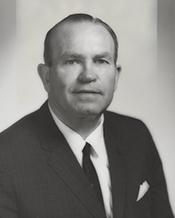
Thomas Gettys
Former U.S. Representative · South Carolina District 5 · 1963–1975 · Democratic
Thomas Gettys represented South Carolina's District 5 in the United States House of Representatives (1963–1975) for the Democratic party. The page below collects sourced biographical facts, term history, committee roles, and provenance for Gettys.
Bioguide ID: G000144
Key facts
- Full name
- Thomas Gettys
- State
- South Carolina
- District
- District 5
- Party
- Democratic
- House service
- 1963–1975
- First House term
- 1963
- Status
- Left office
- Current term ends
- —
- Born
- 1912
- Bioguide ID
- G000144
- Committee assignments
- —
- Dataset version
- 1.20260605
Biographical narrative
926 words · sourced from the Wikipedia REST extract
Thomas Smithwick Gettys was a prominent political figure in South Carolina, serving as a U.S. Representative for the state's fifth congressional district. A member of the Democratic Party, Gettys held office from 1963 until his resignation in 1974, completing a total of six terms in the House of Representatives. His career spanned a significant period in American history, marked by various social and political changes. Born in 1912, Gettys's life journey encompassed education, military service, and a commitment to public service that ultimately led him to a lengthy tenure in Congress.
Early life and career
Tom S. Gettys was born on June 19, 1912, in Rock Hill, South Carolina. He received his early education in the public schools of Rock Hill, where he developed a foundation for his future academic and professional pursuits. Following his primary education, Gettys attended Clemson College, which is now known as Clemson University, where he began to cultivate his interests in leadership and public service. He later transferred to Erskine College, where he earned a Bachelor of Arts degree in 1933. His educational journey continued with graduate studies at both Duke University and Winthrop College, institutions that further enriched his academic background.
Before entering the political arena, Gettys engaged in various professional roles. He began his career in education, working as a teacher and later as a school administrator at Central School from 1935 to 1941. This experience in the educational sector likely influenced his later legislative priorities, particularly in areas concerning education and community development. During World War II, Gettys served in the United States Navy from 1942 to 1946, contributing to the war effort during a pivotal time in American history. After his military service, he returned to his community and took on a role as staff for U.S. Representative James P. Richards from 1942 to 1951, which provided him with firsthand experience in the workings of Congress and the legislative process.
In addition to his work in education and politics, Gettys also served as the postmaster of Rock Hill from 1951 to 1954. This position allowed him to further connect with his community and understand the needs of his constituents. His involvement in local governance included a significant role as a member and chairman of the board of trustees for Rock Hill School District Three from 1953 to 1960, where he was instrumental in shaping educational policies and initiatives at the local level. Following his tenure in these various roles, Gettys transitioned into law, establishing a private practice that would complement his political career.
House tenure
Gettys's political career took a significant turn when he was elected to the U.S. House of Representatives. He was first elected as a Democrat to the Eighty-eighth Congress by special election, filling the vacancy created by the resignation of Representative Robert W. Hemphill. This election marked the beginning of Gettys's congressional career in 1963. He was subsequently reelected to five additional terms, serving through the Eighty-ninth Congress and into the Ninety-third Congress. His tenure in the House was characterized by a commitment to representing the interests of his constituents in South Carolina's fifth district.
During his time in Congress, Gettys participated in various legislative activities and contributed to discussions on numerous issues facing the nation. His experience as a school administrator and educator likely informed his perspectives on education policy, while his background in law may have influenced his approach to legislative matters. Gettys's ability to navigate the complexities of Congress and advocate for his district was evident throughout his service. He resigned from his position on December 31, 1974, and did not seek reelection for the Ninety-fourth Congress, concluding a notable chapter in his political career.
Legislative focus and committees
Throughout his six terms in the House of Representatives, Gettys's legislative focus encompassed a range of issues pertinent to his constituents and the broader national landscape. While specific details regarding the bills he sponsored or supported are not provided, it is reasonable to infer that his background in education and community service shaped his priorities in Congress. Gettys's commitment to educational initiatives, community development, and local governance likely influenced his legislative agenda.
As a member of the Democratic Party during a time of significant social change in the United States, Gettys was part of a larger movement advocating for civil rights, education reform, and social welfare programs. His tenure coincided with the civil rights movement, which sought to address issues of racial equality and justice. It is likely that Gettys's legislative efforts were aligned with the broader goals of the Democratic Party during this transformative period.
In addition to his legislative work, Gettys's involvement in various committees would have further defined his contributions to Congress. While specific committee assignments are not detailed in the available information, members of Congress typically serve on committees that align with their interests and expertise. Given Gettys's background in education and law, it is plausible that he participated in committees related to education, labor, and social services, where he could advocate for policies benefiting his constituents and the state of South Carolina.
After concluding his congressional career, Gettys returned to Rock Hill, South Carolina, where he continued to engage with his community until his passing on June 8, 2003. He was interred in Neely's Creek Associate Reformed Church Cemetery, leaving behind a legacy of public service and commitment to the people of South Carolina. His life and career reflect the dedication of an individual who navigated various roles in education, law, and politics, ultimately contributing to the governance of his state and nation.
Notable legislation
Sponsored and co-sponsored legislation for Thomas Gettys is pending operator curation. The biographical narrative above carries the same provenance trail until per-bill rows are written.
Sources
- [1]https://en.wikipedia.org/wiki/Thomas_S._GettysWikipedia · retrieved 2026-06-05
Notable quotes
Sourced quotes for Thomas Gettys are pending operator curation. Narrative-scope provenance remains attached below.
Sources
- [1]https://en.wikipedia.org/wiki/Thomas_S._GettysWikipedia · retrieved 2026-06-05
Key positions
Curated policy positions for Thomas Gettys are pending operator review. The biographical narrative above carries the same provenance trail until per-topic positions are written.
Sources
- [1]https://en.wikipedia.org/wiki/Thomas_S._GettysWikipedia · retrieved 2026-06-05
Terms served
- 1963–1965U.S. House · Term 1 · Democratic
- 1965–1967U.S. House · Term 2 · Democratic
- 1967–1969U.S. House · Term 3 · Democratic
- 1969–1971U.S. House · Term 4 · Democratic
- 1971–1973U.S. House · Term 5 · Democratic
- 1973–1975U.S. House · Term 6 · Democratic
Sources & provenance
Every attributable claim above carries a per-section [N] marker that resolves to the corresponding URL below. Each entry records the upstream provider, the canonical URL, and the timestamp at which the source was retrieved by the ingest pipeline.
Key facts
- https://bioguide.congress.gov/search/bio/G000144bioguide · retrieved 2026-06-05
- https://www.govtrack.us/congress/members/404513govtrack · retrieved 2026-06-05
Biographical narrative
- https://en.wikipedia.org/wiki/Thomas_S._Gettyswikipedia · retrieved 2026-06-05
Find your representative
Every U.S. state elects representatives by district. Browse South Carolina’s delegation, the full former-representative roster, or explore the role and term length.
Related on The Candidate
- Preceded by James RichardsEarlier holder of the South Carolina District 5 House seat · Democratic.Open
- Succeeded by Kenneth HollandLater holder of the South Carolina District 5 House seat · Democratic.Open
- Arthur Ravenel Jr.Former U.S. Representative · South Carolina District 1 · RepublicanOpen
- Benjamin WhittemoreFormer U.S. Representative · South Carolina District 1 · RepublicanOpen
- Clara McMillanFormer U.S. Representative · South Carolina District 1 · DemocraticOpen
- Daniel WallaceFormer U.S. Representative · South Carolina District 1 · DemocraticOpen