
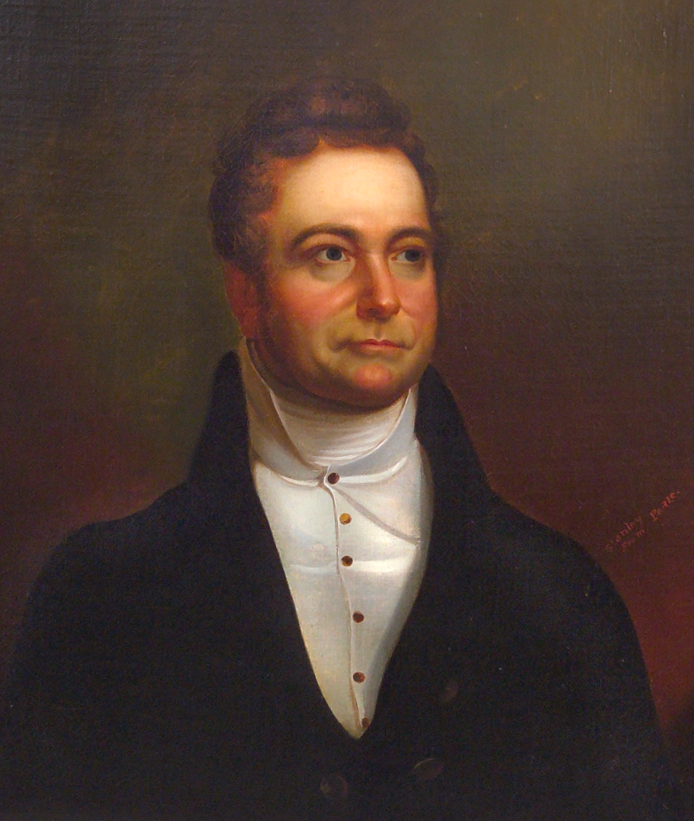
Historical · U.S. Senate · Maryland
William Pinkney
Former U.S. Senator from Maryland · 1819–1823 · Republican · Class 1
William Pinkney represented Maryland in the United States Senate (1819–1823) for the Republican party. The page below collects sourced biographical facts, term history, committee roles, and provenance for Pinkney.
Bioguide ID: P000362
Key facts
- Full name
- William Pinkney
- State
- Maryland
- Party
- Republican
- Senate class
- Class I
- Senate service
- 1819–1823
- First Senate term
- 1819
- Status
- Left office
- Current term ends
- —
- Born
- 1764
- Bioguide ID
- P000362
- Committee assignments
- —
- Dataset version
- 1.20260602
Biographical narrative
1,050 words · sourced from the Wikipedia REST extract
William Pinkney was a prominent American statesman and lawyer who served as a U.S. Senator from Maryland. A member of the Republican Party, Pinkney's political career spanned several decades, during which he held various significant roles, including U.S. Attorney General and Minister Plenipotentiary to Russia. His tenure in the Senate lasted from 1819 until his death in 1822, marking him as a key figure in early American politics and law.
Early life and career
William Pinkney was born on March 17, 1764, in Annapolis, Maryland, which was then part of the Thirteen Colonies. His family's residence was situated along the banks of the Severn River, providing them with views of the Chesapeake Bay. Pinkney's ancestry was English, and he received his early education at King William School, a private institution that is now known as St. John's College. His teacher, Mr. Brefhard, recognized Pinkney's intelligence and provided him with private lessons after he left formal schooling at the age of thirteen.
In his youth, Pinkney pursued studies in medicine, although he never practiced in that field. Instead, he turned his attention to law, which was a common path for aspiring lawyers at the time. He read law under the tutelage of an established firm and was admitted to the bar in 1786. After practicing law for two years in Harford County, Maryland, he began to engage in politics, being elected as a delegate to Maryland's state constitutional convention.
Pinkney's oratory skills and command of language were notable, contributing to his reputation as an articulate speaker. He married Anne Rodgers, and together they had ten children, one of whom, Edward Coote Pinkney, gained recognition as a poet after his death.
Pinkney's political career began in earnest in April 1788 when he was elected as a delegate to the Maryland convention that ratified the United States Constitution. He served in the Maryland House of Delegates from 1788 to 1792 and again in 1795. His political influence grew when he was elected mayor of Annapolis, a position he held from 1795 to 1800. In 1790, he was elected to the U.S. House of Representatives, serving a term in 1791. After a brief hiatus, he returned to Congress, representing Maryland's fifth district from 1815 to 1816.
In addition to his legislative roles, Pinkney held several significant legal positions. In 1801, President Thomas Jefferson appointed him as Attorney General for the District of Pennsylvania, and later, he served as Attorney General of Maryland from 1805 to 1806. His diplomatic career began when he was appointed as a co-U.S. Minister to Great Britain alongside James Monroe from 1806 to 1807, where they sought to address issues affecting American shipping. Although they negotiated the Monroe–Pinkney Treaty, it was ultimately rejected by President Jefferson due to its failure to address British impressment of American sailors.
Pinkney continued to serve in various capacities, including as Minister Plenipotentiary from 1808 to 1811. He returned to Maryland to serve in the state Senate in 1811 and was appointed by President James Madison as Attorney General of the United States in 1811. During the War of 1812, he served as a major in the U.S. Army and was wounded in battle. Following the war, he was appointed Minister Plenipotentiary to Russia from 1816 to 1818, where he also undertook a special mission to the Kingdom of Naples.
Senate tenure
William Pinkney's tenure in the U.S. Senate began when he was elected by the Maryland state legislature in 1818. He took office in 1819 as a member of Senate Class 1 and served until his death in 1822. During his time in the Senate, Pinkney was involved in various legislative discussions and decisions that shaped the early years of the United States. His legal background and experience in diplomacy likely informed his contributions to the Senate, where he engaged in debates on issues relevant to the nation at that time.
Pinkney's Senate career was marked by his commitment to the principles of the Republican Party, which emphasized a limited federal government and agrarian interests. His previous roles in the Maryland House of Delegates and as a U.S. Congressman provided him with a solid foundation for his work in the Senate. He was known for his articulate speeches and his ability to engage with complex legal and political issues.
Despite his contributions, Pinkney's time in the Senate was cut short by his untimely death on February 25, 1822. His passing occurred shortly before the end of his Senate term, and he is buried at the Congressional Cemetery in Washington, D.C. His legacy includes not only his service in the Senate but also his earlier roles in law and diplomacy, which contributed to the development of the United States during its formative years.
Legislative focus and committees
During his time in the Senate, William Pinkney was involved in various legislative matters that reflected the political and social climate of the early 19th century. His extensive legal background and experience in high-level government positions allowed him to contribute meaningfully to discussions on law, governance, and foreign affairs. Although specific details regarding the committees he served on or the particular legislation he championed are not documented, it is evident that his prior experiences as a lawyer and diplomat informed his approach to legislative issues.
Pinkney's involvement in significant legal cases, such as his participation in the landmark Supreme Court case McCulloch v. Maryland, underscored his legal acumen and commitment to the principles of federalism. This case, which upheld the right of Congress to charter the Bank of the United States, was a pivotal moment in American legal history and demonstrated Pinkney's influence on the interpretation of constitutional law.
Throughout his Senate career, Pinkney likely engaged with a range of issues pertinent to Maryland and the nation, including economic policies, state rights, and foreign relations. His background as a diplomat would have provided him with insights into international matters, which were increasingly relevant as the United States navigated its position on the global stage.
In summary, William Pinkney's career as a U.S. Senator was characterized by his legal expertise and his commitment to public service. His contributions to the Senate and his earlier roles in government and law reflect the complexities of early American governance and the evolving landscape of the nation during his lifetime.
Notable legislation
Sponsored and co-sponsored legislation for William Pinkney is pending operator curation. The biographical narrative above carries the same provenance trail until per-bill rows are written.
Sources
- [1]https://en.wikipedia.org/wiki/William_PinkneyWikipedia · retrieved 2026-06-02
Notable quotes
Sourced quotes for William Pinkney are pending operator curation. Narrative-scope provenance remains attached below.
Sources
- [1]https://en.wikipedia.org/wiki/William_PinkneyWikipedia · retrieved 2026-06-02
Key positions
Curated policy positions for William Pinkney are pending operator review. The biographical narrative above carries the same provenance trail until per-topic positions are written.
Sources
- [1]https://en.wikipedia.org/wiki/William_PinkneyWikipedia · retrieved 2026-06-02
Terms served
- 1791–1793U.S. House · District 3 · Term 1 · Democratic
- 1815–1817U.S. House · District 5 · Term 2 · Republican
- 1819–1821U.S. Senate · Term 3 · Republican · Class I
- 1821–1823U.S. Senate · Term 4 · Republican · Class I
Sources & provenance
Every attributable claim above carries a per-section [N] marker that resolves to the corresponding URL below. Each entry records the upstream provider, the canonical URL, and the timestamp at which the source was retrieved by the ingest pipeline.
Key facts
- https://bioguide.congress.gov/search/bio/P000362bioguide · retrieved 2026-06-02
- https://www.govtrack.us/congress/members/408758govtrack · retrieved 2026-06-02
Biographical narrative
- https://en.wikipedia.org/wiki/William_Pinkneywikipedia · retrieved 2026-06-02
Find your senator
Every U.S. state elects two senators. Browse Maryland’s delegation, the full former-senator roster, or explore the role and term length.
Related on The Candidate
- Preceded by Alexander HansonEarlier holder of the Maryland Class I Senate seat · Federalist.Open
- Succeeded by Joseph KentLater holder of the Maryland Class I Senate seat · Whig.Open
- Anthony KennedyFormer U.S. Senator from Maryland · UnionistOpen
- Arthur GormanFormer U.S. Senator from Maryland · DemocraticOpen
- Barbara MikulskiFormer U.S. Senator from Maryland · DemocraticOpen
- Republican PartyFederal candidates and office holders on the Republican line.Open