
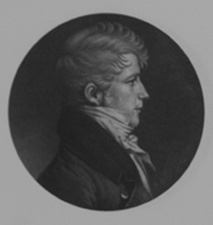
Historical · U.S. Senate · Maryland
John Kerr
Former U.S. Senator from Maryland · 1841–1843 · Whig · Class 3
John Kerr represented Maryland in the United States Senate (1841–1843) for the Whig party. The page below collects sourced biographical facts, term history, committee roles, and provenance for Kerr.
Bioguide ID: K000139
Key facts
- Full name
- John Kerr
- State
- Maryland
- Party
- Whig
- Senate class
- Class III
- Senate service
- 1841–1843
- First Senate term
- 1841
- Status
- Left office
- Current term ends
- —
- Born
- 1780
- Bioguide ID
- K000139
- Committee assignments
- —
- Dataset version
- 1.20260602
Biographical narrative
858 words · sourced from the Wikipedia REST extract
John Kerr was a prominent American politician who served as a U.S. Senator from Maryland as a member of the Whig Party. His political career spanned several decades, during which he held various positions, including roles in both the House of Representatives and the Senate. Kerr's contributions to American politics occurred during a transformative period in the early 19th century, and his legislative work reflected the issues and challenges of his time.
Early life and career
John Kerr was born on January 15, 1780, at Greenbury Point, located near Annapolis, Maryland. He pursued his education at St. John's College in Annapolis, graduating in 1799. Following his graduation, Kerr studied law and was admitted to the bar in 1801, which allowed him to begin his legal practice in Easton, Maryland. His early career in law laid the groundwork for his future in public service.
Kerr's initial foray into politics began when he took on the role of Deputy State's Attorney for Talbot County, Maryland, serving from 1806 to 1810. His legal expertise and involvement in local governance provided him with valuable experience that would later inform his legislative work. During the War of 1812, Kerr commanded a company of militia, demonstrating his commitment to public service and his community. In 1817, he was appointed as the agent of the State of Maryland, where he was tasked with prosecuting claims against the federal government related to the War of 1812. This role further solidified his reputation as a dedicated public servant.
Kerr's political career continued to evolve when he was elected to the Nineteenth and Twentieth Congresses, serving from March 4, 1825, to March 3, 1829. Although he was unsuccessful in his bid for re-election in 1828, he returned to Congress two years later after winning election to the Twenty-second Congress, where he served from March 4, 1831, to March 3, 1833. During his time in the House of Representatives, Kerr held the position of chairman of the Committee on Territories, where he played a role in shaping policies related to the expansion and governance of U.S. territories.
Senate tenure
Kerr's tenure in the U.S. Senate began when he was elected as a Whig to fill the vacancy left by the death of Senator John S. Spence. He served in the Senate from January 5, 1841, until March 3, 1843. His election to the Senate marked a significant milestone in his political career, allowing him to influence national legislation and engage with broader issues affecting the country.
During his time in the Senate, Kerr was actively involved in several committees. He served as chairman of the Committee on Public Buildings during the Twenty-seventh Congress, where he oversaw matters related to the construction and maintenance of federal buildings. Additionally, he was a member of the Committee on Patents and the Patent Office, which focused on issues related to intellectual property and innovation. These committee roles provided Kerr with opportunities to contribute to important legislative discussions and decisions that shaped the nation's infrastructure and technological advancements.
Kerr's Senate career was relatively brief, lasting just over two years. He did not seek re-election after his term ended in 1843. His departure from the Senate marked the conclusion of his formal legislative career, but his contributions to American politics continued to be felt through his earlier roles in Congress and his influence on local governance.
Legislative focus and committees
Throughout his political career, John Kerr demonstrated a commitment to issues that were significant during the early 19th century. His work in Congress and the Senate reflected the growing concerns of the time, including territorial expansion, infrastructure development, and the regulation of patents. As chairman of the Committee on Territories, Kerr was involved in discussions surrounding the governance of newly acquired lands and the implications of westward expansion for the nation.
In the Senate, his role as chairman of the Committee on Public Buildings highlighted his focus on federal infrastructure, an essential aspect of the government's responsibilities during a period of growth and development in the United States. The construction and maintenance of public buildings were critical for the functioning of the federal government and the provision of services to citizens.
Kerr's involvement with the Committee on Patents and the Patent Office underscored his interest in fostering innovation and protecting intellectual property rights. This focus was particularly relevant as the nation was experiencing rapid industrialization and technological advancements. Kerr's legislative efforts in these areas contributed to the broader discourse on how the government could support economic growth and the development of new technologies.
Kerr's political legacy is also reflected in his family, as his son, John Bozman Kerr, followed in his footsteps and served in Congress. This continuation of public service within the family underscores the impact that John Kerr had on both his immediate community and the broader political landscape of the United States.
John Kerr passed away on February 21, 1844, in Easton, Maryland. He was interred in the Bozman family cemetery at "Bellville," near Oxford Neck, Maryland. His life and career remain a part of the historical narrative of American politics during a formative period in the nation's history.
Notable legislation
Sponsored and co-sponsored legislation for John Kerr is pending operator curation. The biographical narrative above carries the same provenance trail until per-bill rows are written.
Sources
- [1]https://en.wikipedia.org/wiki/John_Leeds_KerrWikipedia · retrieved 2026-06-02
Notable quotes
Sourced quotes for John Kerr are pending operator curation. Narrative-scope provenance remains attached below.
Sources
- [1]https://en.wikipedia.org/wiki/John_Leeds_KerrWikipedia · retrieved 2026-06-02
Key positions
Curated policy positions for John Kerr are pending operator review. The biographical narrative above carries the same provenance trail until per-topic positions are written.
Sources
- [1]https://en.wikipedia.org/wiki/John_Leeds_KerrWikipedia · retrieved 2026-06-02
Terms served
- 1825–1827U.S. House · District 7 · Term 1 · Adams
- 1827–1829U.S. House · District 7 · Term 2 · Adams
- 1831–1833U.S. House · District 7 · Term 3 · Whig
- 1841–1843U.S. Senate · Term 4 · Whig · Class III
Sources & provenance
Every attributable claim above carries a per-section [N] marker that resolves to the corresponding URL below. Each entry records the upstream provider, the canonical URL, and the timestamp at which the source was retrieved by the ingest pipeline.
Key facts
- https://bioguide.congress.gov/search/bio/K000139bioguide · retrieved 2026-06-02
- https://www.govtrack.us/congress/members/406305govtrack · retrieved 2026-06-02
Biographical narrative
- https://en.wikipedia.org/wiki/John_Leeds_Kerrwikipedia · retrieved 2026-06-02
Find your senator
Every U.S. state elects two senators. Browse Maryland’s delegation, the full former-senator roster, or explore the role and term length.
Related on The Candidate
- Preceded by John SpenceEarlier holder of the Maryland Class III Senate seat · Whig.Open
- Succeeded by James PearceLater holder of the Maryland Class III Senate seat · Democratic.Open
- Alexander HansonFormer U.S. Senator from Maryland · FederalistOpen
- Anthony KennedyFormer U.S. Senator from Maryland · UnionistOpen
- Arthur GormanFormer U.S. Senator from Maryland · DemocraticOpen
- Barbara MikulskiFormer U.S. Senator from Maryland · DemocraticOpen