
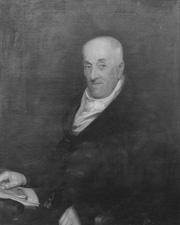
Historical · U.S. Senate · Maryland
William Hindman
Former U.S. Senator from Maryland · 1800–1801 · Federalist · Class 3
William Hindman represented Maryland in the United States Senate (1800–1801) for the Federalist party. The page below collects sourced biographical facts, term history, committee roles, and provenance for Hindman.
Bioguide ID: H000629
Key facts
- Full name
- William Hindman
- State
- Maryland
- Party
- Federalist
- Senate class
- Class III
- Senate service
- 1800–1801
- First Senate term
- 1800
- Status
- Left office
- Current term ends
- —
- Born
- 1743
- Bioguide ID
- H000629
- Committee assignments
- —
- Dataset version
- 1.20260602
Biographical narrative
838 words · sourced from the Wikipedia REST extract
William Hindman was an American lawyer and politician who served as a U.S. Senator from Maryland. A member of the Federalist Party, he held office during a formative period in American history, contributing to both state and federal governance. His political career was marked by service in various legislative bodies, including the Continental Congress and the U.S. House of Representatives, before his brief tenure in the Senate. Hindman's life spanned significant events in early American history, and he played a role in shaping the political landscape of Maryland and the nation.
Early life and career
William Hindman was born on April 1, 1743, in Dorchester County, Maryland, into a family with a history of public service. He was the second son of Jacob Hindman, a plantation owner and former sheriff of Talbot County, and Mary Trippe Hindman. Jacob Hindman was also a member of the colonial Assembly, which likely influenced William's early interest in governance and law. William pursued legal studies at the Inns of Court in London, returning to Maryland in 1765 to begin his legal career. After being admitted to the bar, he established a law practice in Talbot County, where he gained a reputation as a skilled attorney.
Hindman's political involvement began in earnest during the American Revolutionary War. From 1775 to 1777, he served in the revolutionary government of Maryland as the Treasurer for the Eastern Shore. This position allowed him to engage directly with the financial aspects of the war effort. In 1777, he was elected to the Maryland State Senate, where he was re-elected multiple times, serving until 1784. His tenure in the state Senate coincided with critical developments in Maryland's governance and the broader revolutionary movement.
In 1785 and 1786, Hindman was selected as a delegate to the Continental Congress, where he participated in discussions that would shape the future of the United States. After his time in the Continental Congress, he returned to Maryland and served on the governor's executive council from 1789 to 1792. His political career continued to evolve, and in 1792, he was re-elected to the Maryland State Senate. Later that year, he transitioned to the federal level when he was elected to the United States House of Representatives to fill a vacancy created by the resignation of Joshua Seney. Hindman served in the House from 1793 to 1799, during which he was known for his opposition to the Eleventh Amendment to the United States Constitution, being one of only nine representatives to vote against it.
Senate tenure
William Hindman's Senate career began in December 1800, following the resignation of James Lloyd, the sitting U.S. Senator from Maryland. Hindman was appointed to complete Lloyd's term, which lasted until November 1801. During his time in the Senate, he was affiliated with the Federalist Party, which was one of the two dominant political parties in the early years of the United States. The Federalists were known for their support of a strong central government and their advocacy for policies that promoted commerce and industry.
Hindman's Senate tenure was relatively brief, lasting just over a year. He participated in the legislative processes of the time, contributing to discussions and decisions that were significant for both Maryland and the nation. However, he chose not to seek re-election at the end of his term, marking the conclusion of his formal legislative career at the federal level. His decision not to run again may have been influenced by the shifting political landscape, as the Federalist Party began to lose influence in the early 19th century.
Legislative focus and committees
During his time in the Senate, William Hindman was involved in various legislative matters, although specific details regarding the bills he sponsored or the committees he served on are not extensively documented. His alignment with the Federalist Party suggests that his legislative focus may have included issues related to federal authority, economic development, and national security, which were central themes for Federalists during this period.
Hindman's earlier experiences in the Maryland State Senate and the U.S. House of Representatives likely informed his approach to governance in the Senate. His background in law and his previous roles in state and federal government provided him with a comprehensive understanding of the legislative process and the challenges facing the young nation. While his Senate career was short, it was part of a broader trajectory of public service that included significant contributions at both the state and national levels.
After leaving the Senate, Hindman returned to private life and his plantation in Maryland. He continued to be involved in local affairs and remained a respected figure in his community. Hindman passed away on January 19, 1822, in Baltimore, Maryland. He was laid to rest in St. Paul's Burial Ground, leaving behind a legacy as a public servant who participated in the early governance of the United States. His life and career reflect the complexities and challenges of a nation in its formative years, as well as the role of individuals in shaping its political landscape.
Notable legislation
Sponsored and co-sponsored legislation for William Hindman is pending operator curation. The biographical narrative above carries the same provenance trail until per-bill rows are written.
Sources
- [1]https://en.wikipedia.org/wiki/William_HindmanWikipedia · retrieved 2026-06-02
Notable quotes
Sourced quotes for William Hindman are pending operator curation. Narrative-scope provenance remains attached below.
Sources
- [1]https://en.wikipedia.org/wiki/William_HindmanWikipedia · retrieved 2026-06-02
Key positions
Curated policy positions for William Hindman are pending operator review. The biographical narrative above carries the same provenance trail until per-topic positions are written.
Sources
- [1]https://en.wikipedia.org/wiki/William_HindmanWikipedia · retrieved 2026-06-02
Terms served
- 1791–1793U.S. House · District 2 · Term 1 · Federalist
- 1793–1795U.S. House · District 7 · Term 2 · Federalist
- 1795–1797U.S. House · District 7 · Term 3 · Federalist
- 1797–1799U.S. House · District 7 · Term 4 · Federalist
- 1800–1801U.S. Senate · Term 5 · Federalist · Class III
Sources & provenance
Every attributable claim above carries a per-section [N] marker that resolves to the corresponding URL below. Each entry records the upstream provider, the canonical URL, and the timestamp at which the source was retrieved by the ingest pipeline.
Key facts
- https://bioguide.congress.gov/search/bio/H000629bioguide · retrieved 2026-06-02
- https://www.govtrack.us/congress/members/405486govtrack · retrieved 2026-06-02
Biographical narrative
- https://en.wikipedia.org/wiki/William_Hindmanwikipedia · retrieved 2026-06-02
Find your senator
Every U.S. state elects two senators. Browse Maryland’s delegation, the full former-senator roster, or explore the role and term length.
Related on The Candidate
- Preceded by John HenryEarlier holder of the Maryland Class III Senate seat · Federalist.Open
- Succeeded by Robert WrightLater holder of the Maryland Class III Senate seat · Republican.Open
- Alexander HansonFormer U.S. Senator from Maryland · FederalistOpen
- Anthony KennedyFormer U.S. Senator from Maryland · UnionistOpen
- Arthur GormanFormer U.S. Senator from Maryland · DemocraticOpen
- Barbara MikulskiFormer U.S. Senator from Maryland · DemocraticOpen