
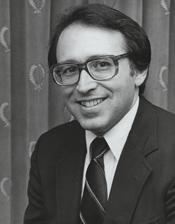
Historical · U.S. House · Michigan · District 3
Howard Wolpe III
Former U.S. Representative · Michigan District 3 · 1979–1993 · Democratic
Howard Wolpe III represented Michigan's District 3 in the United States House of Representatives (1979–1993) for the Democratic party. The page below collects sourced biographical facts, term history, committee roles, and provenance for III.
Bioguide ID: W000682
Key facts
- Full name
- Howard Wolpe III
- State
- Michigan
- District
- District 3
- Party
- Democratic
- House service
- 1979–1993
- First House term
- 1979
- Status
- Left office
- Current term ends
- —
- Born
- 1939
- Bioguide ID
- W000682
- Committee assignments
- —
- Dataset version
- 1.20260605
Biographical narrative
915 words · sourced from the Wikipedia REST extract
Howard E. Wolpe was an American politician and academic who served as a U.S. Representative for Michigan's 3rd congressional district from 1979 until 1993. A member of the Democratic Party, Wolpe was known for his expertise in African politics and played a significant role in shaping U.S. foreign policy towards the continent during his time in Congress. Following his congressional career, he served as a presidential special envoy to the African Great Lakes Region during the Clinton administration, where he was involved in crucial peace negotiations. Wolpe's career also included roles in academia and various organizations focused on international development and democracy.
Early life and career
Howard Eliot Wolpe was born on November 3, 1939. He pursued higher education at Reed College, where he earned a Bachelor of Arts degree, and later obtained a Ph.D. from the Massachusetts Institute of Technology. His academic background laid the foundation for his future endeavors in politics and international relations.
Before entering the U.S. Congress, Wolpe was active in local politics. He served in the Michigan House of Representatives and was a member of the Kalamazoo City Commission. His early political career provided him with valuable experience in governance and public service, which he would later apply on a national level.
Wolpe's commitment to public service extended beyond local politics. He was involved in various academic and policy-oriented roles, including teaching positions at Western Michigan University, Michigan State University, and the University of Michigan. His academic work often focused on political science and international relations, particularly concerning African nations. Wolpe co-published a volume on modernization in Nigeria and contributed to discussions on U.S. foreign policy and ethnic conflict management.
In 1994, Wolpe sought the Democratic nomination for Governor of Michigan. He initially approached former First Lady of Michigan, Helen Milliken, to be his running mate, but she declined. Subsequently, he chose State Senator Debbie Stabenow as his lieutenant governor candidate. However, the Wolpe-Stabenow ticket faced a significant defeat in the general election against incumbent Governor John Engler and Lieutenant Governor Connie Binsfeld.
House tenure
Wolpe was elected to the U.S. House of Representatives in 1978, representing Michigan's 3rd congressional district. His tenure in Congress lasted for seven terms, beginning in 1979 and concluding in 1993. During his time in office, Wolpe became a prominent figure in the House, particularly in matters related to foreign affairs and development assistance.
As a member of the House Foreign Affairs Committee, Wolpe specialized in African politics for a significant portion of his congressional career. He chaired the Subcommittee on Africa, where he was instrumental in shaping legislation that addressed critical issues on the continent. Notably, he co-authored and managed the passage of the Comprehensive Anti-Apartheid Act of 1986, which imposed sanctions against South Africa in an effort to combat apartheid. This legislation was significant as it overrode a presidential veto, demonstrating Wolpe's influence and commitment to human rights.
Wolpe also played a key role in the African Famine Recovery and Development Act, which represented a comprehensive revision of U.S. development assistance policies towards Africa during the 1980s. This act included the establishment of the African Development Fund, aiming to address the pressing issues of famine and underdevelopment in various African nations.
Throughout his congressional career, Wolpe represented a district that included Kalamazoo and parts of Lansing, Michigan. His district was known for its Democratic leanings, which helped him secure re-election multiple times. However, in 1992, redistricting led to the elimination of his congressional district, merging it with that of Republican Fred Upton. This change prompted Wolpe to retire from Congress, as the new district was more aligned with Upton's political base.
Legislative focus and committees
Wolpe's legislative focus during his time in Congress was heavily centered on foreign affairs, particularly concerning Africa. His expertise in African politics allowed him to advocate for policies that addressed humanitarian crises and promoted democratic governance on the continent. As chair of the Subcommittee on Africa, he was involved in various initiatives aimed at improving U.S. relations with African nations and addressing issues such as famine, conflict, and human rights abuses.
In addition to his work on the Comprehensive Anti-Apartheid Act, Wolpe's legislative efforts included advocating for development assistance programs that aimed to alleviate poverty and promote sustainable development in African countries. His work in this area was characterized by a commitment to understanding the complexities of African societies and the challenges they faced.
Wolpe's contributions to U.S. foreign policy extended beyond his congressional tenure. After leaving Congress, he served as a presidential special envoy to the African Great Lakes Region during the Clinton administration. In this role, he led U.S. delegations in peace negotiations aimed at resolving civil conflicts in Burundi and the Democratic Republic of the Congo. His involvement in these peace talks underscored his ongoing commitment to international diplomacy and conflict resolution.
In addition to his government service, Wolpe was active in various organizations dedicated to democracy and international development. He held positions on the boards of directors of several organizations, including the National Endowment for Democracy and Africare. His academic and policy work continued to influence discussions on U.S. foreign policy and the management of ethnic and racial conflicts.
Howard E. Wolpe passed away on October 25, 2011, at his home in Saugatuck, Michigan. His legacy includes significant contributions to U.S. foreign policy, particularly in relation to Africa, and a commitment to public service that spanned decades. Memorial services were held in Kalamazoo and Washington, D.C., honoring his life and work.
Notable legislation
Sponsored and co-sponsored legislation for Howard Wolpe III is pending operator curation. The biographical narrative above carries the same provenance trail until per-bill rows are written.
Sources
- [1]https://en.wikipedia.org/wiki/Howard_WolpeWikipedia · retrieved 2026-06-05
Notable quotes
Sourced quotes for Howard Wolpe III are pending operator curation. Narrative-scope provenance remains attached below.
Sources
- [1]https://en.wikipedia.org/wiki/Howard_WolpeWikipedia · retrieved 2026-06-05
Key positions
Curated policy positions for Howard Wolpe III are pending operator review. The biographical narrative above carries the same provenance trail until per-topic positions are written.
Sources
- [1]https://en.wikipedia.org/wiki/Howard_WolpeWikipedia · retrieved 2026-06-05
Terms served
- 1979–1981U.S. House · Term 1 · Democratic
- 1981–1983U.S. House · Term 2 · Democratic
- 1983–1985U.S. House · Term 3 · Democratic
- 1985–1987U.S. House · Term 4 · Democratic
- 1987–1989U.S. House · Term 5 · Democratic
- 1989–1991U.S. House · Term 6 · Democratic
- 1991–1993U.S. House · Term 7 · Democratic
Sources & provenance
Every attributable claim above carries a per-section [N] marker that resolves to the corresponding URL below. Each entry records the upstream provider, the canonical URL, and the timestamp at which the source was retrieved by the ingest pipeline.
Key facts
- https://bioguide.congress.gov/search/bio/W000682bioguide · retrieved 2026-06-05
- https://www.govtrack.us/congress/members/411834govtrack · retrieved 2026-06-05
Biographical narrative
- https://en.wikipedia.org/wiki/Howard_Wolpewikipedia · retrieved 2026-06-05
Find your representative
Every U.S. state elects representatives by district. Browse Michigan’s delegation, the full former-representative roster, or explore the role and term length.
Related on The Candidate
- Preceded by Garry BrownEarlier holder of the Michigan District 3 House seat · Republican.Open
- Succeeded by Vernon EhlersLater holder of the Michigan District 3 House seat · Republican.Open
- Alexander BuelFormer U.S. Representative · Michigan District 1 · DemocraticOpen
- Alfred LuckingFormer U.S. Representative · Michigan District 1 · DemocraticOpen
- Alpheus WilliamsFormer U.S. Representative · Michigan District 1 · DemocraticOpen
- Bart StupakFormer U.S. Representative · Michigan District 1 · DemocraticOpen