
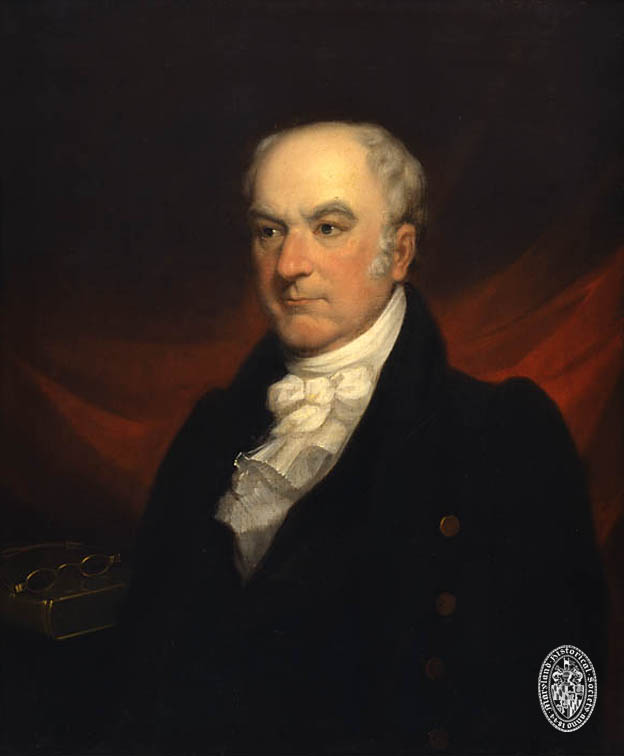
Historical · U.S. Senate · Maryland
Robert Harper
Former U.S. Senator from Maryland · 1816–1817 · Federalist · Class 1
Robert Harper represented Maryland in the United States Senate (1816–1817) for the Federalist party. The page below collects sourced biographical facts, term history, committee roles, and provenance for Harper.
Bioguide ID: H000225
Key facts
- Full name
- Robert Harper
- State
- Maryland
- Party
- Federalist
- Senate class
- Class I
- Senate service
- 1816–1817
- First Senate term
- 1816
- Status
- Left office
- Current term ends
- —
- Born
- —
- Bioguide ID
- H000225
- Committee assignments
- —
- Dataset version
- 1.20260602
Biographical narrative
865 words · sourced from the Wikipedia REST extract
Robert Harper was a prominent American politician and soldier who served as a U.S. Senator from Maryland. A member of the Federalist Party, Harper's Senate tenure lasted from January 1816 until his resignation in December of the same year. His political career spanned multiple roles, including service in the South Carolina House of Representatives, the U.S. House of Representatives, and the Maryland State Senate. Harper is often remembered for his involvement in significant historical events, including the XYZ Affair, and for his contributions to the political landscape of early America.
Early life and career
Robert Harper was born in January 1765 near Fredericksburg, Virginia, as the fifth child and first son of Jesse Harper and Emily Diana Goodloe. In 1769, his family relocated to Granville, North Carolina, where Harper received his early education at home before attending grammar school. At the age of fifteen, he joined a volunteer cavalry corps and served in the American Revolutionary Army, contributing to the fight for American independence.
After the war, Harper undertook a surveying tour through Kentucky and Tennessee in 1783. He furthered his education by graduating from the College of New Jersey, now known as Princeton University, in 1785. Following his graduation, he studied law in Charleston, South Carolina, while also teaching school. He was admitted to the bar in 1786, marking the beginning of his legal career.
Harper commenced his legal practice in the Ninety-Six District of South Carolina before moving to Charleston in 1789. His political career began in earnest when he was elected to the South Carolina House of Representatives, serving from 1790 to 1795. During this time, he was elected to fill a vacancy in the U.S. House of Representatives caused by the death of Alexander Gillon. Harper was subsequently reelected to the Fourth, Fifth, and Sixth Congresses, serving as a U.S. Representative from February 1795 until March 1801. Notably, he held the position of chairman of the Committee on Ways and Means during the Fifth and Sixth Congresses. Additionally, he played a significant role as one of the impeachment managers appointed by the House of Representatives in 1798 to oversee the impeachment proceedings against William Blount.
Senate tenure
Harper's political journey took a new direction when he moved to Baltimore, Maryland, where he continued his legal practice. His involvement in local affairs included participation in the mob riots against the British in June 1812, reflecting his commitment to the defense of his country during the War of 1812. He attained the rank of major general during the conflict, underscoring his military service.
In 1815, Harper was involved in the establishment of the Baltimore Exchange Company and served on its first board of directors. His political career in Maryland culminated in his election to the United States Senate, where he served from January 1816 until his resignation in December of the same year. Harper's brief Senate term was marked by his alignment with the Federalist Party, and he was an unsuccessful candidate for Vice President in the 1816 election. He did, however, receive one electoral vote for vice president in the 1820 election.
Despite his short tenure in the Senate, Harper's political activities during this period were significant. His resignation in December 1816 marked the end of his time in the Senate, but he remained active in public life. In 1815, he was elected to the American Antiquarian Society, reflecting his interest in historical preservation and scholarship. He also traveled extensively in Europe in 1819 and 1820, further broadening his horizons and experiences.
Legislative focus and committees
During his time in the Senate, Harper's legislative focus and committee assignments are not extensively documented, but his previous experience in the House of Representatives likely influenced his approach to governance. His earlier role as chairman of the Committee on Ways and Means in the House would have provided him with a strong foundation in fiscal policy and legislative procedures, which he could have applied during his Senate tenure.
Harper's political ideology as a Federalist aligned with the party's emphasis on a strong central government and a robust national defense. His involvement in the War of 1812 and his military rank suggest that he prioritized national security issues, a theme that was prevalent in Federalist politics at the time. Although specific legislative initiatives or votes during his Senate term are not detailed, Harper's background in law and his previous congressional experience would have informed his contributions to discussions on economic and military matters.
After leaving the Senate, Harper continued to engage in public life, including participating in notable events such as the ceremonies surrounding the visit of the Marquis de Lafayette to Baltimore in 1824. His legacy includes not only his political contributions but also his familial connections, as he was the father of several children, including Charles Carroll Harper, who continued the family lineage.
Robert Harper passed away on January 14, 1825, in Baltimore, Maryland. Initially interred in the family burial ground on his estate, his remains were later moved to Green Mount Cemetery in Baltimore. His life and career reflect the complexities of early American politics and the evolving role of the federal government in the years following the Revolutionary War.
Notable legislation
Sponsored and co-sponsored legislation for Robert Harper is pending operator curation. The biographical narrative above carries the same provenance trail until per-bill rows are written.
Sources
- [1]https://en.wikipedia.org/wiki/Robert_Goodloe_HarperWikipedia · retrieved 2026-06-02
Notable quotes
Sourced quotes for Robert Harper are pending operator curation. Narrative-scope provenance remains attached below.
Sources
- [1]https://en.wikipedia.org/wiki/Robert_Goodloe_HarperWikipedia · retrieved 2026-06-02
Key positions
Curated policy positions for Robert Harper are pending operator review. The biographical narrative above carries the same provenance trail until per-topic positions are written.
Sources
- [1]https://en.wikipedia.org/wiki/Robert_Goodloe_HarperWikipedia · retrieved 2026-06-02
Terms served
- 1793–1795U.S. House · District 5 · Term 1
- 1795–1797U.S. House · District 5 · Term 2 · Federalist
- 1797–1799U.S. House · District 5 · Term 3 · Federalist
- 1799–1801U.S. House · District 5 · Term 4 · Federalist
- 1816–1817U.S. Senate · Term 5 · Federalist · Class I
Sources & provenance
Every attributable claim above carries a per-section [N] marker that resolves to the corresponding URL below. Each entry records the upstream provider, the canonical URL, and the timestamp at which the source was retrieved by the ingest pipeline.
Key facts
- https://bioguide.congress.gov/search/bio/H000225bioguide · retrieved 2026-06-02
- https://www.govtrack.us/congress/members/405103govtrack · retrieved 2026-06-02
Biographical narrative
- https://en.wikipedia.org/wiki/Robert_Goodloe_Harperwikipedia · retrieved 2026-06-02
Find your senator
Every U.S. state elects two senators. Browse Maryland’s delegation, the full former-senator roster, or explore the role and term length.
Related on The Candidate
- Preceded by John HowardEarlier holder of the Maryland Class I Senate seat · Federalist.Open
- Succeeded by William PinkneyLater holder of the Maryland Class I Senate seat · Republican.Open
- Alexander HansonFormer U.S. Senator from Maryland · FederalistOpen
- Anthony KennedyFormer U.S. Senator from Maryland · UnionistOpen
- Arthur GormanFormer U.S. Senator from Maryland · DemocraticOpen
- Barbara MikulskiFormer U.S. Senator from Maryland · DemocraticOpen